Back to blogs
AI 2026-07-08 8 min read

The Future of AI in Enterprise Web Development

How AI is transitioning from a buzzword to a foundational layer in modern enterprise architecture, and how you can prepare your stack for the shift.

The Future of AI in Enterprise Web Development

Artificial Intelligence is no longer just a shiny feature to add to an enterprise application. It is rapidly becoming the underlying fabric that powers how businesses operate, analyze data, and interact with customers. In the past year, we have seen a massive shift from basic API wrappers to deeply integrated intelligence.

The Shift in Architecture

Previously, developers treated AI as a third-party microservice. You sent a request, waited for a response, and displayed it. Today, the architecture demands lower latency, streaming capabilities, and context-aware persistence. The data layer and the intelligence layer are merging.

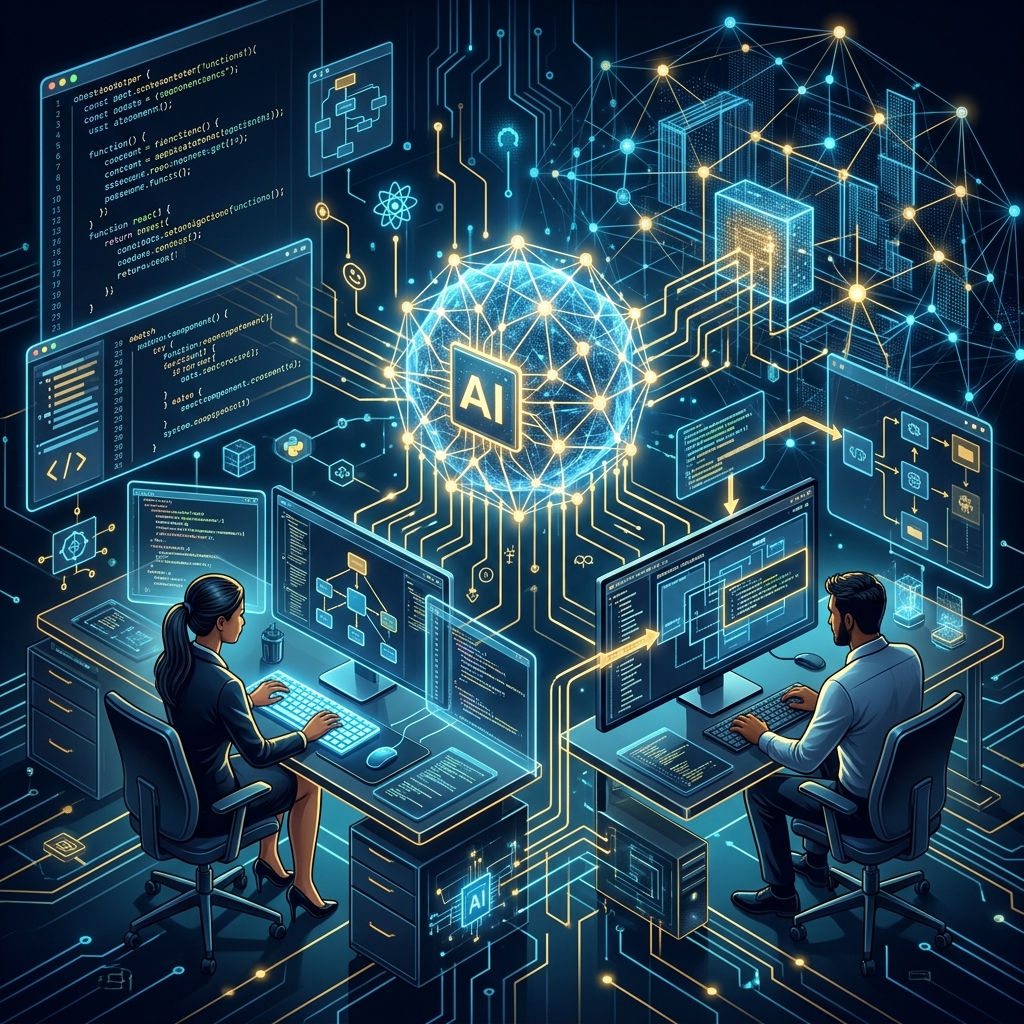
A modern AI-integrated enterprise architecture where data flows seamlessly between the application and neural nodes.

Key Components of an AI-Native Stack

To build true AI-native applications, your stack must evolve. Vector databases, edge computing, and specialized caching layers are no longer optional. Let's look at a typical implementation of a semantic search endpoint using Next.js.

typescript
import { OpenAIEmbeddings } from '@langchain/openai';
import { SupabaseVectorStore } from '@langchain/community/vectorstores/supabase';
import { createClient } from '@supabase/supabase-js';

export async function POST(req: Request) {
  const { query } = await req.json();
  const client = createClient(process.env.SUPABASE_URL, process.env.SUPABASE_KEY);
  
  const vectorStore = new SupabaseVectorStore(new OpenAIEmbeddings(), {
    client,
    tableName: 'documents',
    queryName: 'match_documents',
  });

  const results = await vectorStore.similaritySearch(query, 5);
  return Response.json(results);
}
💡 Tip
Always ensure your vector store is properly indexed. A missing index on a 1M+ row table can turn a 50ms query into a 3-second bottleneck, completely destroying the user experience.

Security and Compliance

When integrating LLMs into enterprise systems, data privacy is paramount. You must guarantee that PII (Personally Identifiable Information) and sensitive company data are not used to train public models. This often means opting for enterprise tiers of services like OpenAI or hosting open-source models (like Llama 3) internally.

⚠️ Warning
Never hardcode API keys or send them directly to the client browser. Always proxy AI requests through your backend to maintain security and enforce rate limits.

The transition to AI-native enterprise development is happening fast. By updating your stack and focusing on security and context management, you can build applications that don't just process data, but truly understand it.


#AI#Architecture#Enterprise#Next.js